
Mount Nemrut Travel Guide: What You Need to Know for the Sunrise Tour
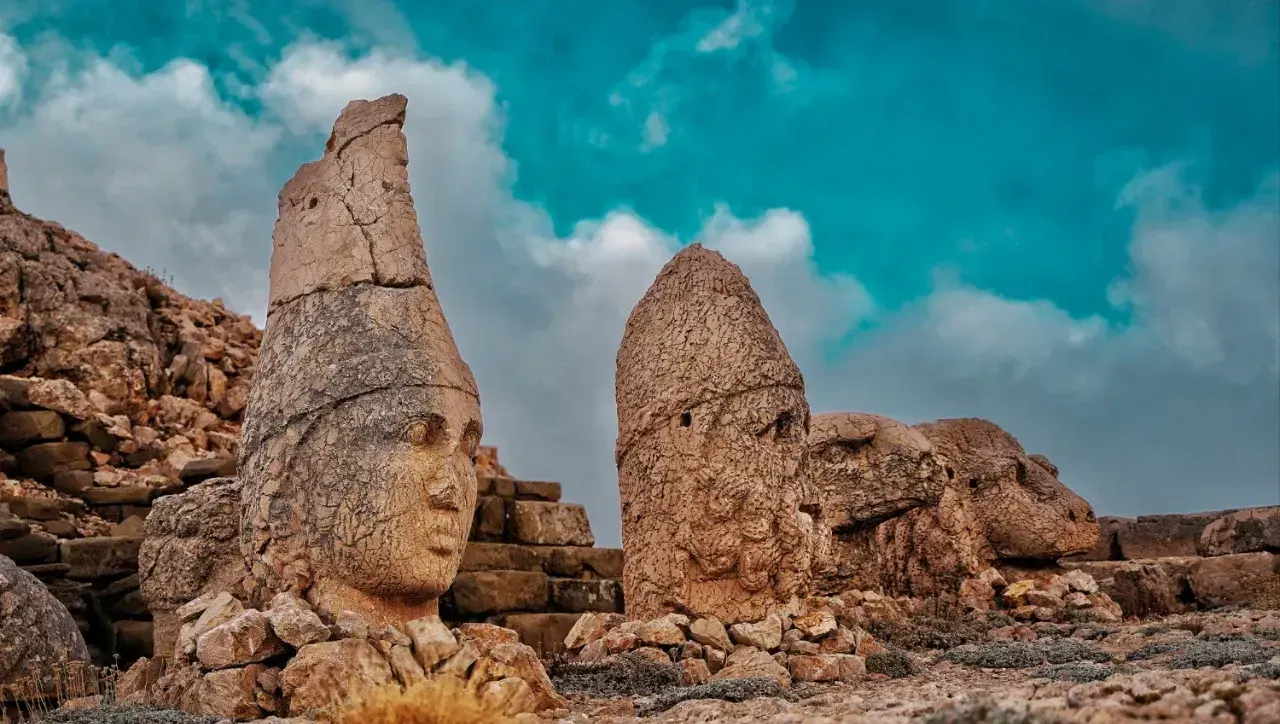
Rising to 2,150 metres between the Euphrates and Tigris basins within the borders of Adıyaman, Mount Nemrut is one of Turkey's most striking archaeological sites. Thanks to the colossal stone heads on its summit, this ancient site has been on the UNESCO World Heritage List since 1987, drawing history enthusiasts and travellers in search of unforgettable views alike. In this article, we've gathered everything you need to know before visiting Mount Nemrut, from getting there and the best time to visit to accommodation and regional cuisine.
What Is Mount Nemrut and Why Is It So Famous?
What makes Mount Nemrut so special are the enormous stone heads that sit on its summit, set against the sky. The question that tends to amaze visitors most is this: how, thousands of years ago, was such a massive monument built at such a high and remote spot? The answer lies in the history of a small but powerful kingdom that once ruled the region. For centuries, the site remained almost entirely forgotten by the outside world until it was discovered in 1881 by Karl Sester, a German engineer working in the Ottoman era. This isolated location is also considered one of the reasons the monument has survived in such good condition to this day. Owing to its geopolitical position, the Kingdom of Commagene also played an important role as a buffer zone between the Roman and Persian empires.
The Kingdom of Commagene and the Story of the Giant Statues
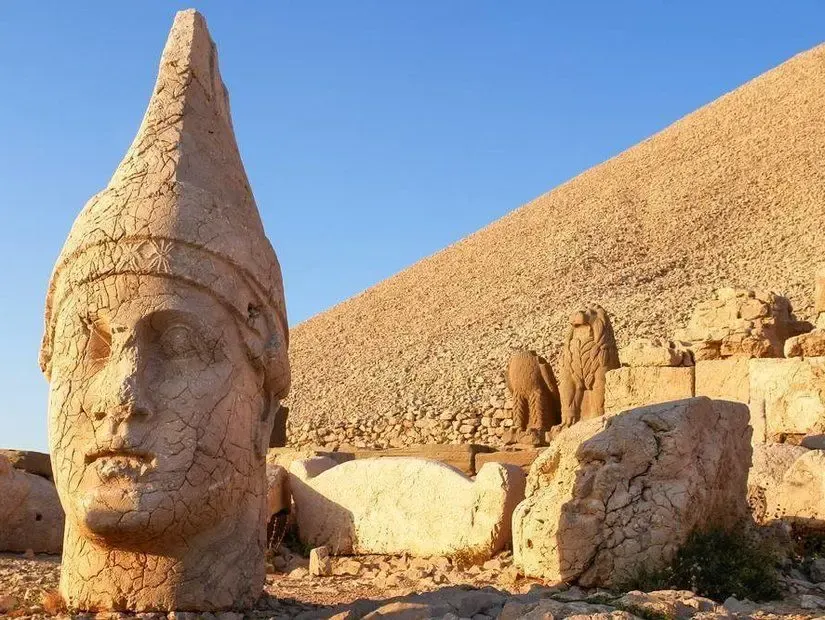
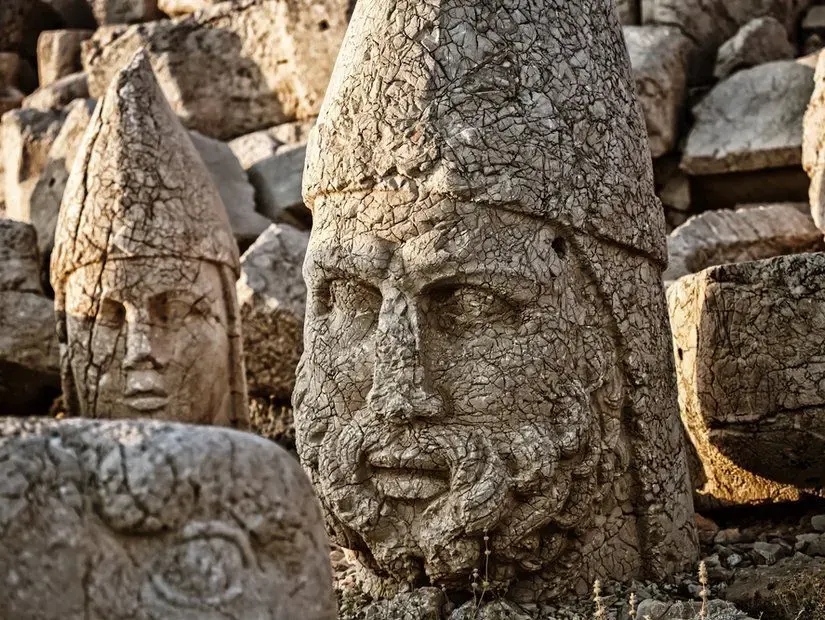
The tomb-sanctuary complex on Mount Nemrut was built in the 1st century BC by King Antiochus I of Commagene as his own tomb and place of worship. Blending Persian and Greek traditions, Antiochus considered himself equal to the gods and placed his own statue alongside those of Zeus, Apollo, Heracles, Tyche and the gods of Commagene. Over the centuries, earthquakes separated these statues on the eastern and western terraces from their bodies, sending the heads tumbling onto the summit and creating the iconic scene of giant heads resting on the ground that we see in photographs today.
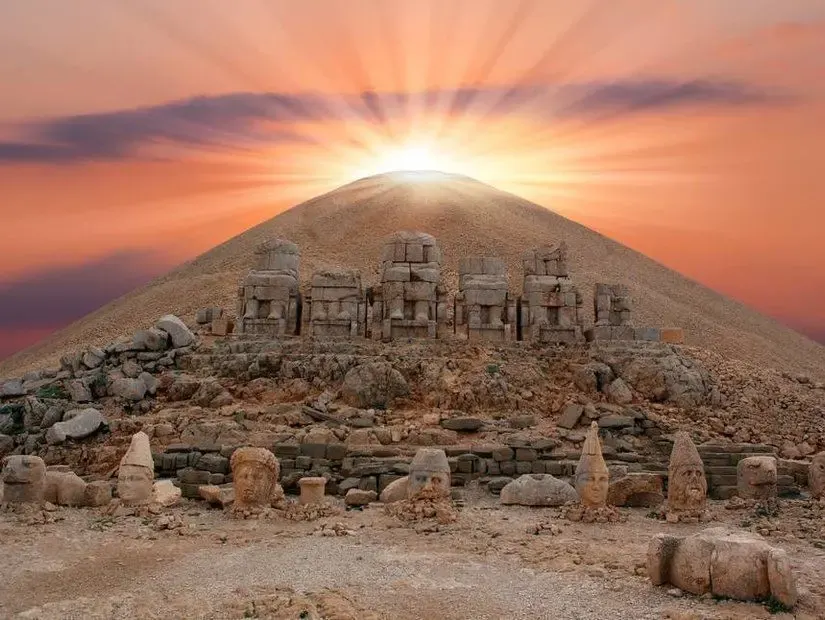
At the centre of the summit stands a tumulus of crushed stone roughly 50 metres high; although King Antiochus's tomb is believed to lie beneath this mound, the burial chamber has never been reached. Separating the eastern and western terraces, this tumulus also divides the two spots from which the sunrise and sunset are watched. While the statues on the eastern terrace are relatively better preserved, the eagle and lion reliefs on the western terrace stand out, particularly the lion horoscope relief, thought to be an astrological record of a date. Walking at the feet of these colossal statues on either terrace, you realise just how small you feel, a sensation that is truly impossible to describe until you've been there.
How to Get to Mount Nemrut? A Ready-Made Package Tour
A trip to Mount Nemrut means juggling transport, accommodation, opening hours and route planning. With our ready-made package tour, we take care of all these details, so all you have to do is enjoy the journey.
- A tour with transport, route and itinerary fully planned
- Sightseeing accompanied by a guide who knows the region
- Peace of mind with a TÜRSAB-certified agency
- Choice of a group tour or a private vehicle tour for your family
You can view dates, prices and the itinerary on the Nemrut Tour page and book online. If you'd like a plan tailored to you or your group, message us on WhatsApp and let's plan the route together.
Sunrise or Sunset? The Best Time to Visit
The most talked-about highlight of any Mount Nemrut trip is the sunrise viewed from the eastern terrace. As the first rays of sunlight paint the giant stone heads orange, they create an unforgettable scene unique to the region. If you're joining a sunrise tour, remember that you'll set off after midnight, and bear in mind that the wind at the summit can be very cold, so pack warm clothing; even in summer, temperatures at the top can drop into single digits overnight. For those who miss the sunrise, the sunset viewed from the western terrace is just as impressive and offers a more relaxed alternative, with no need for a midnight departure.
The best time to visit is between April and October, when the snow has melted and the mountain road is fully open to traffic. Since July and August are the busiest months, we recommend May, June or September for those seeking a quieter experience. In winter, access to the summit can occasionally close completely due to snow, so if you're planning a winter trip, be sure to check road conditions before you go.
Practical Tips for Your Visit
What to Bring?
A thick coat, a beanie or hat, gloves, sturdy non-slip shoes and a flashlight are practically essential for sunrise tours. As food and drink options at the summit may be limited, it's a good idea to bring water and snacks. For photography enthusiasts, a wide-angle lens is extremely useful for fitting both the sunrise and the statues into the frame; if you plan to use a tripod, it's worth factoring in the crowds and wind at the summit.
How Much Time Should You Allow?
A visit to the summit alone takes 1.5–2 hours, including the walk from the car park, while those who also want to see other Commagene remains in the area, such as the ancient city of Arsameia, the Cendere Bridge and the Karakuş Tumulus, are advised to set aside a full day. The Roman-era Cendere Bridge stands out as one of the rare ancient bridges still open to vehicle traffic today. Arsameia, meanwhile, served as the summer capital of the Kingdom of Commagene, and its reliefs include a famous scene depicting the king shaking hands with Heracles.
Where to Stay?
The accommodation options closest to the summit are concentrated in the Kahta district, where you'll find a range of choices from budget-friendly guesthouses to mid-range hotels. Those who want a wider selection and city amenities may prefer to stay in central Adıyaman or Malatya, about two hours away. If you're joining a sunrise tour, spending a night closer to the summit, for example in Kahta, is a sensible choice as it shortens the midnight journey.
Entrance Fee and Visiting Hours
Mount Nemrut National Park is covered by the Museum Pass scheme; as entrance fees and opening hours may vary by season, it's always wise to check the latest information before your trip. For sunrise tours, the park area usually opens to visitors from midnight onwards.
Local Flavors of the Region
Adıyaman and its surroundings are home to the rich flavors of Southeastern Turkish cuisine. Regional specialities such as çiğ köfte, thin-crust lahmacun, katmer and kebabs cooked over embers are among the must-try dishes. Sucuk and pastırma varieties prepared with çemen spice, a speciality of Adıyaman, are also sure to delight your palate. Sampling these flavors at local restaurants in Kahta on your way back from the summit makes for a perfect stop to round off your trip after a long, cold night.
Conclusion
Mount Nemrut is a must-see destination for anyone tracing the footsteps of history or seeking an unforgettable sunrise view. This magnificent legacy of the Kingdom of Commagene offers visitors both a journey through history and a breathtaking natural panorama. If you'd like to enjoy this experience without having to deal with transport, accommodation and guiding arrangements one by one, take a look at our Nemrut Tour itinerary. And for those who want to explore Southeastern and Eastern Anatolia on a broader route, including stops such as Diyarbakır, Mardin, Şanlıurfa and Gaziantep, the GAP Tour offers a great alternative.