
Where Is Zilkale (Zil Kale)? Its History, Architecture and the Story Behind Its Name

In short: Zilkale (Zil Kale) is a medieval castle perched on a steep rock overlooking the Fırtına Valley in the Çamlıhemşin district of Rize. With its forest-ringed walls, four-storey main tower and sweeping valley views, it is one of the most impressive historic landmarks on the Black Sea coast. The easiest way to see Zilkale is on a guided trip with Sümela Tur, departing from Trabzon, on the Pokut Plateau Tour or the Gito Badara Tour.
The history of Zilkale
The exact construction date of Zilkale is unknown, and sources disagree on the matter. Some news sources attribute the castle to the Komnenos dynasty in the 13th century, while Wikipedia points to the 14th or 15th century. According to historian Anthony Bryer, the castle may have been built during the Empire of Trebizond, either by the central government or by local lords.
The castle's purpose, however, is clearer: according to the Kültür Portalı (Culture Portal), Zilkale, together with Kale-i Bala, Ciha Kale and Kız Kalesi, secured an important medieval caravan route leading to İspir. The castle remained in use after the Ottoman conquest of the region and is reported to have served its purpose until the late 1800s. Two hand cannons found at the castle are now on display at the Trabzon Museum.
The restoration launched by the Ministry of Culture and Tourism in 2008 was completed in 2011, according to the Culture Portal. Located within an archaeological site, Zilkale took first place in the Ministry's ranking of "Turkey's 13 most magnificent castles", announced in 2018.
Zilkale's architecture and sections
The castle consists of three sections: the outer walls, the middle walls and the inner citadel. According to the Culture Portal, a path on the northwest leads to the outer wall gate, and after climbing up to a terrace you enter the middle walls through a second gate. The highlights of the middle castle are:
- Guardhouse: The building used by the soldiers who defended the castle.
- Chapel: A small place of worship that historian Bryer described as a rectangular room with an apse, set against the north wall.
- Main tower: Traces of timber bracing and beam holes in the walls reveal that it had four storeys. Its east-facing sides feature arched windows, while the other sides have arrow slits; the top ends in a terrace.
- Bastions: Sources mention eight bastions and a stepped path descending to the Zil Stream.
The Culture Portal places the rock mass on which the castle sits at roughly 750 metres above sea level and about 100 metres above the streambed, while some foreign sources give higher figures. Whatever the numbers, the feeling that the walls are suspended above the valley remains the same.
Why "Zil" Kale?
The name is often explained by the Turkish word "zil", meaning "bell". However, according to Turkish Wikipedia, the castle's old name was "Zir Kale", meaning "Lower Castle", and over time this name evolved into "Zil Kale" in local speech. The 1871 Trabzon Province Yearbook (Salname) also refers to two ruined castles in the area by the names "Kale-i Bala" (Upper Castle) and "Zir". By this explanation, Zilkale is the "lower castle" in relation to Kale-i Bala.
Views and photography at the castle
What makes Zilkale unforgettable is its location. Set amid forested slopes, its stone walls look out over the Fırtına Stream from a steep rock, offering a striking shot from every angle. A few photography tips:
- Wide-angle shots framing the castle with the surrounding forest best capture its position in the valley.
- Shots taken from inside the middle walls towards the main tower show the castle's tiered layout.
- On misty or cloudy days, the castle becomes a silhouette rising out of the fog, offering a completely different photo opportunity.
- Wear comfortable, non-slip shoes for the paths and steps.
The best season to visit Zilkale
The castle can be visited at any time of year. In summer, the surrounding forest is lush and green; in autumn, the green gives way to shades of yellow and brown, and the castle takes on an entirely different look. Since the weather on the Black Sea coast can change quickly, we recommend bringing a light raincoat. You can check our current tour dates via our WhatsApp line.
Explore Zilkale with Sümela Tur
With Sümela Tur (licence no: 7059), a TÜRSAB Group A travel agency serving Trabzon since 2005, you can see Zilkale with a guide, free from the hassle of driving and parking.
Pokut Plateau Tour
Our day tour departs from Trabzon at 08:00: Fırtına Valley, Çinçiva (Şenyuva) Bridge and a break at a village café, followed by Zilkale. Then photos and lunch at the Pokut Plateau at around 2,075 metres, plus a roughly 30-minute nature walk and free time at the Sal Plateau. Transport in a luxury vehicle, a Turkish-speaking guide and mandatory travel insurance are included. Explore the Pokut Plateau Tour.
Gito Badara Tour
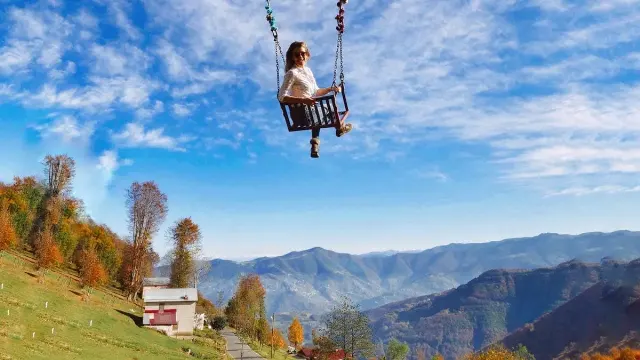
Also departing from Trabzon at 08:00, this route features Sürmene knives, the Fırtına Valley (with optional zipline and swing), the Sevdaluk House in Çinçiva Village, and free time plus lunch at the Gito Plateau at 2,000–2,100 metres. Next, we visit Zilkale, built on one of the most commanding points over the valley to protect the historic trade route, and round off the day at the Palovit Waterfall. Explore the Gito Badara Tour.
Black Sea Tour
For those who want to explore the region over several days, our Black Sea Tour package also covers Çinçiva Village and Bridge on the road to Ayder, Zilkale and the Palovit Waterfall. See all options on our Black Sea plateau tours page.
For dates and availability, message us on WhatsApp at 0532 170 91 54, and let's choose the tour that suits you best together.
Along with Zilkale, you'll also see these places on the tour
- Fırtına Valley: The green canyon that is home to the castle. Fırtına Valley and Zilkale travel guide
- Çinçiva (Şenyuva) Bridge and Sevdaluk House: A historic stone arch bridge and village. Çinçiva Village guide
- Pokut Plateau: The plateau above the clouds. Pokut Plateau travel guide
- Sal Plateau: A short nature walk on the Pokut tour. Sal Plateau guide
- Gito and Badara: The high plateaus of Çamlıhemşin. Gito and Badara guide
- Palovit Waterfall: A stop on the Gito Badara and Black Sea tours.
Frequently asked questions
Where is Zilkale?
Zilkale stands on a steep rock on the western slope of the Fırtına Stream, in the Fırtına Valley, in the Çamlıhemşin district of Rize. It is a stop on Sümela Tur's Pokut Plateau and Gito Badara tours.
When was Zilkale built?
The exact date is unknown. Sources give dates ranging from the 13th century to the 14th–15th centuries; the castle is generally associated with the Empire of Trebizond.
What does the name Zilkale mean?
The name is usually explained by the word "zil" (bell); however, it is noted that the form "Zir" found in older sources means "lower", and that the name gradually turned into "Zil" over time.
Which tours include Zilkale?
It is included in the Pokut Plateau Tour, the Gito Badara Tour and the multi-day Black Sea Tour programmes. On a guided tour, you hear the castle's story on site and enjoy the day without worrying about transport.
Cover photo: Autumn colours at Zil Kale, Arif Miletli, Wikimedia Commons, CC BY-SA 4.0.